

Reliable Delivery at Agent Speed through intelligent Engineering
Introduction
Expedition in a nut-shell
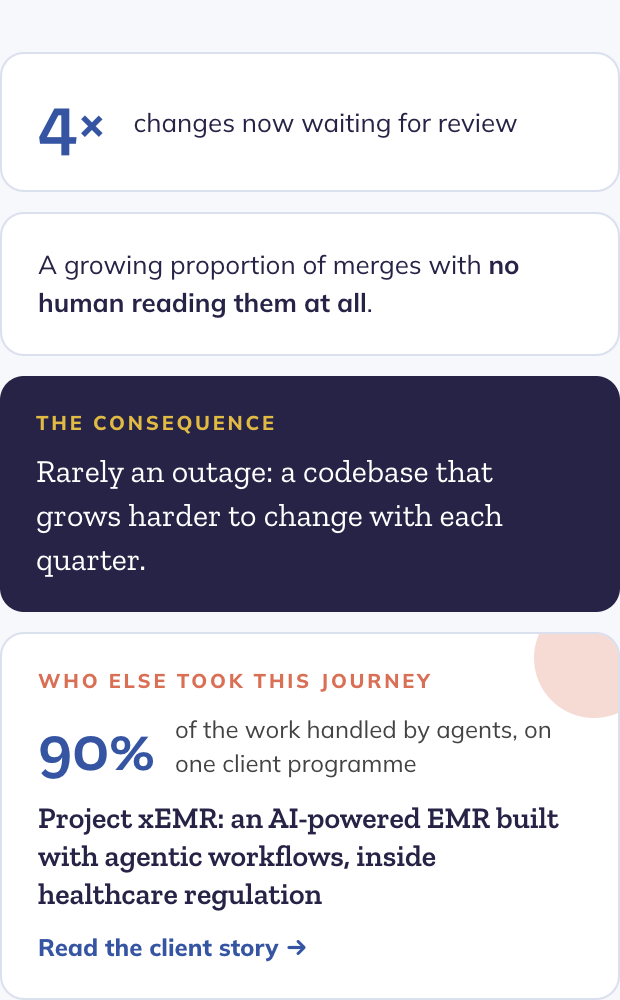
Everyone talks about coding agents as the breakthrough in software delivery. However, that treats the writing as the constraint. For most organisations it no longer is: agents have removed the limit on how much can be written. What they have not removed is the question of whether anything still guarantees the output is right.
For most of software delivery’s history that guarantee was a human reading the change. It worked because of two conditions that were rarely stated: low volume, meaning changes arrived at a speed at which a person could see all of them, and authorship, meaning somebody had understood the change once and a reviewer could interrogate that reasoning. Agentic workflows removed both conditions simultaneously.

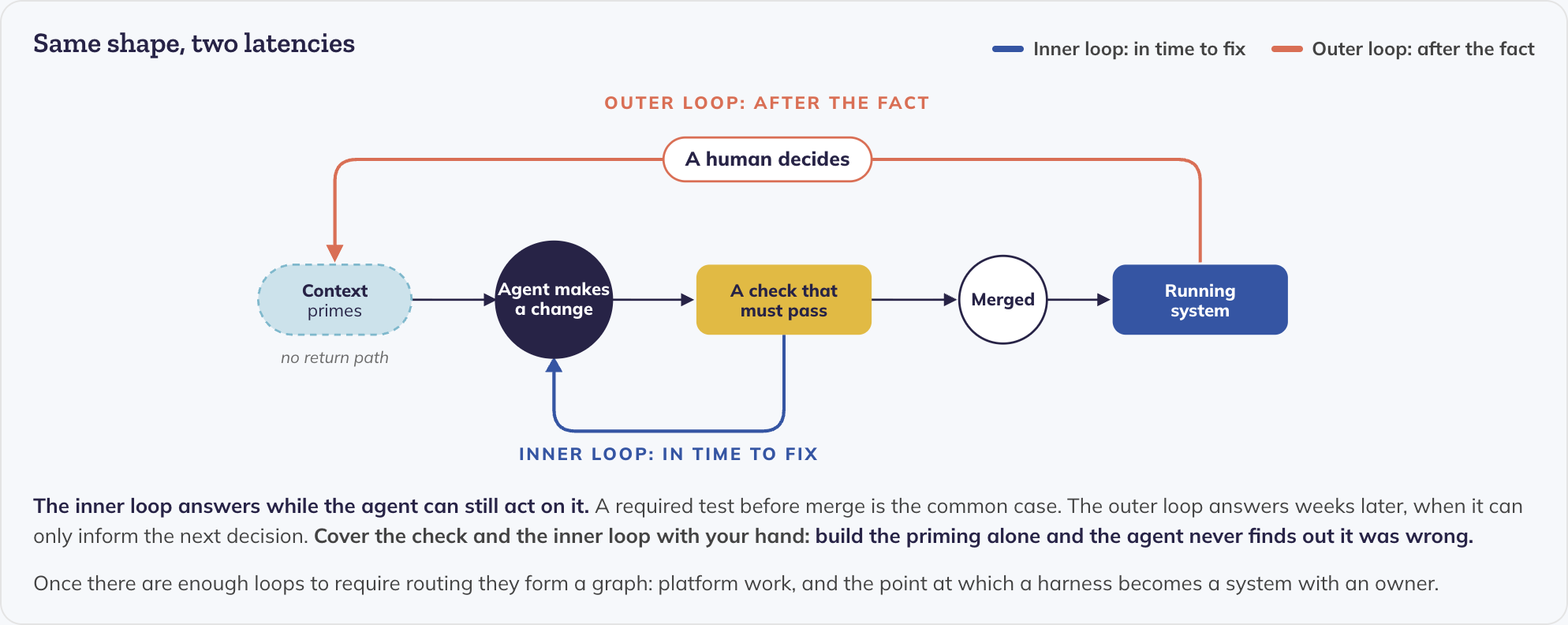
This reframes the question in front of engineering leadership. Whether to adopt agents has largely been settled by the volume already moving through delivery pipelines. What remains unsettled is what surrounds those agents while they work: the tools, checks and guardrails within which they operate, collectively the harness. Every organisation running agents at scale already has one, whether or not anybody designed it.
Most organisations have never taken stock of what is in theirs, or how much of it holds. That inventory is where intelligent Engineering starts.
 Highlights
What the harness actually contains
A harness is what makes an agent likely to succeed. It works in two ways, and most organisations have built only the first.


 Introduction Relevancy
Relevancy
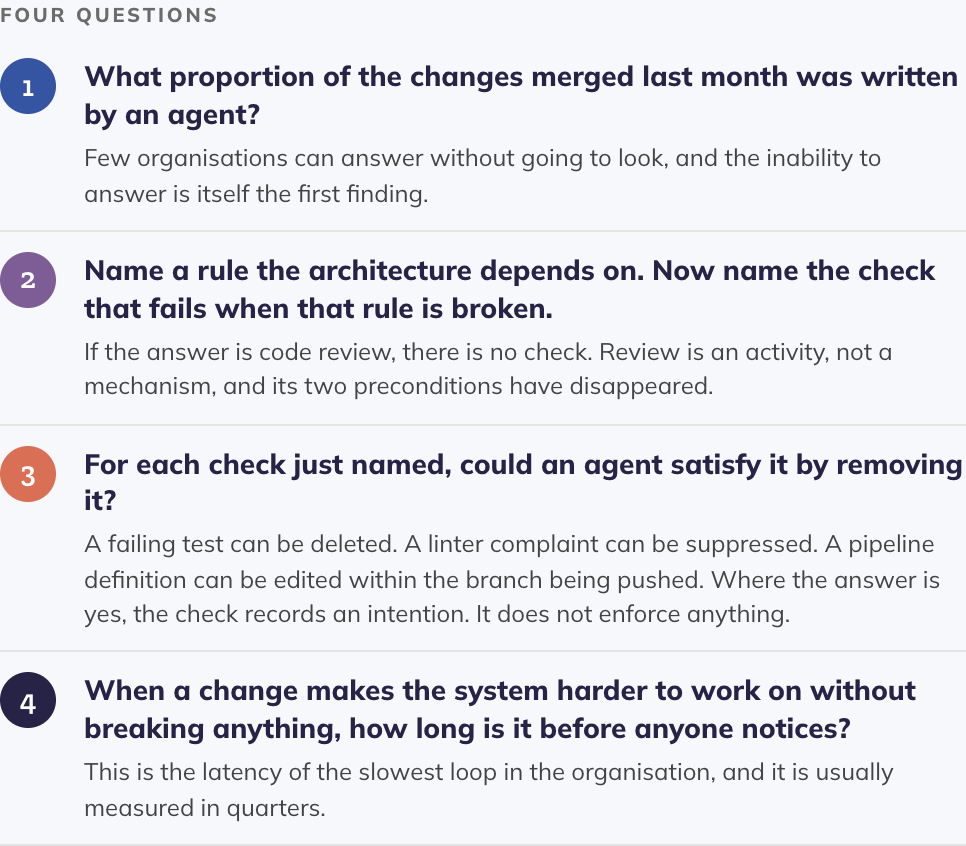
How would you answer these questions?
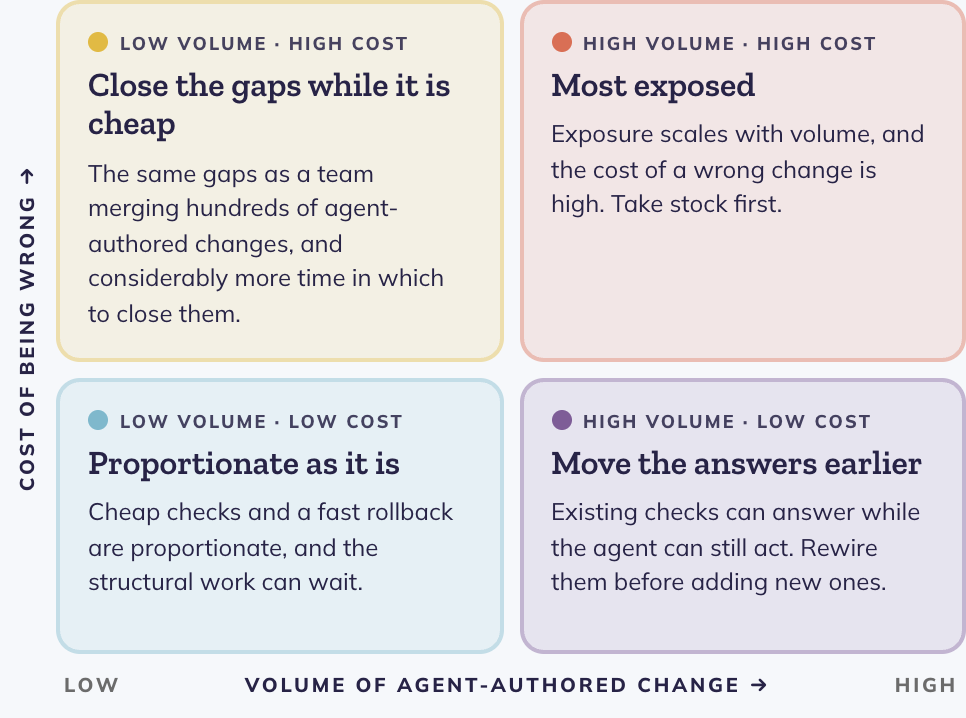
Find the quadrant closest to your organisation, then answer the four questions beside it.


Highlights PreparationPreparation
Things you need before the journey

Relevancy ItineraryItinerary
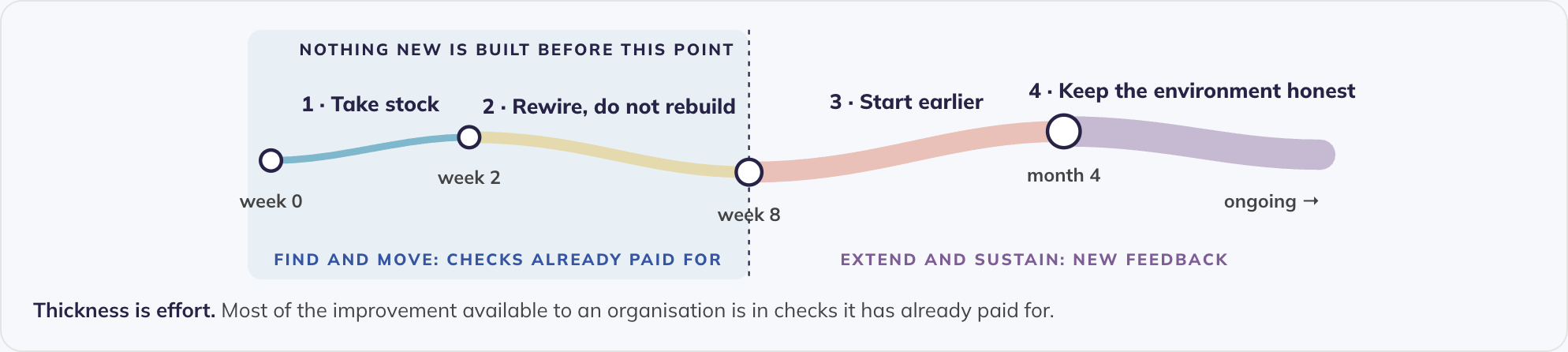
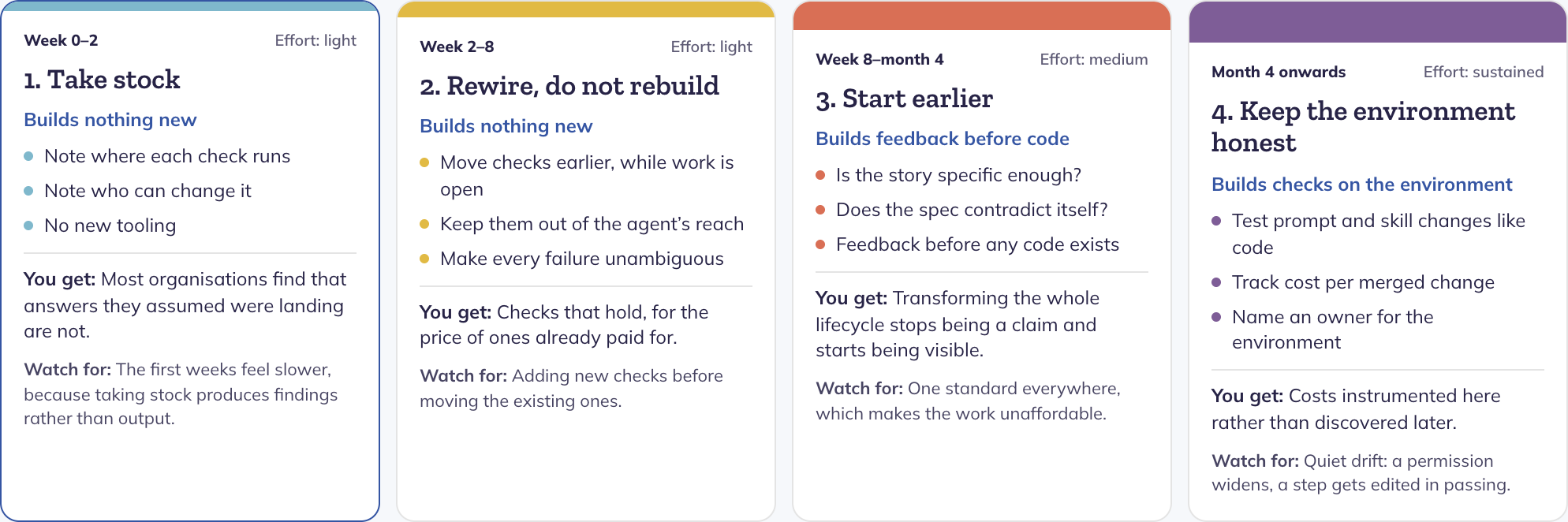
Four legs of the journey
The order is by cost, not by ambition. The first two legs build nothing new: they find out where the existing answers go, and then move them.


RESTART